What is Memed?
Memed is an e-prescription platform used by over 80,000 doctors in Brazil. Beyond prescriptions, the platform also issues other medical documents that require a digital signature — among them, solicitations for exams.
Starting point
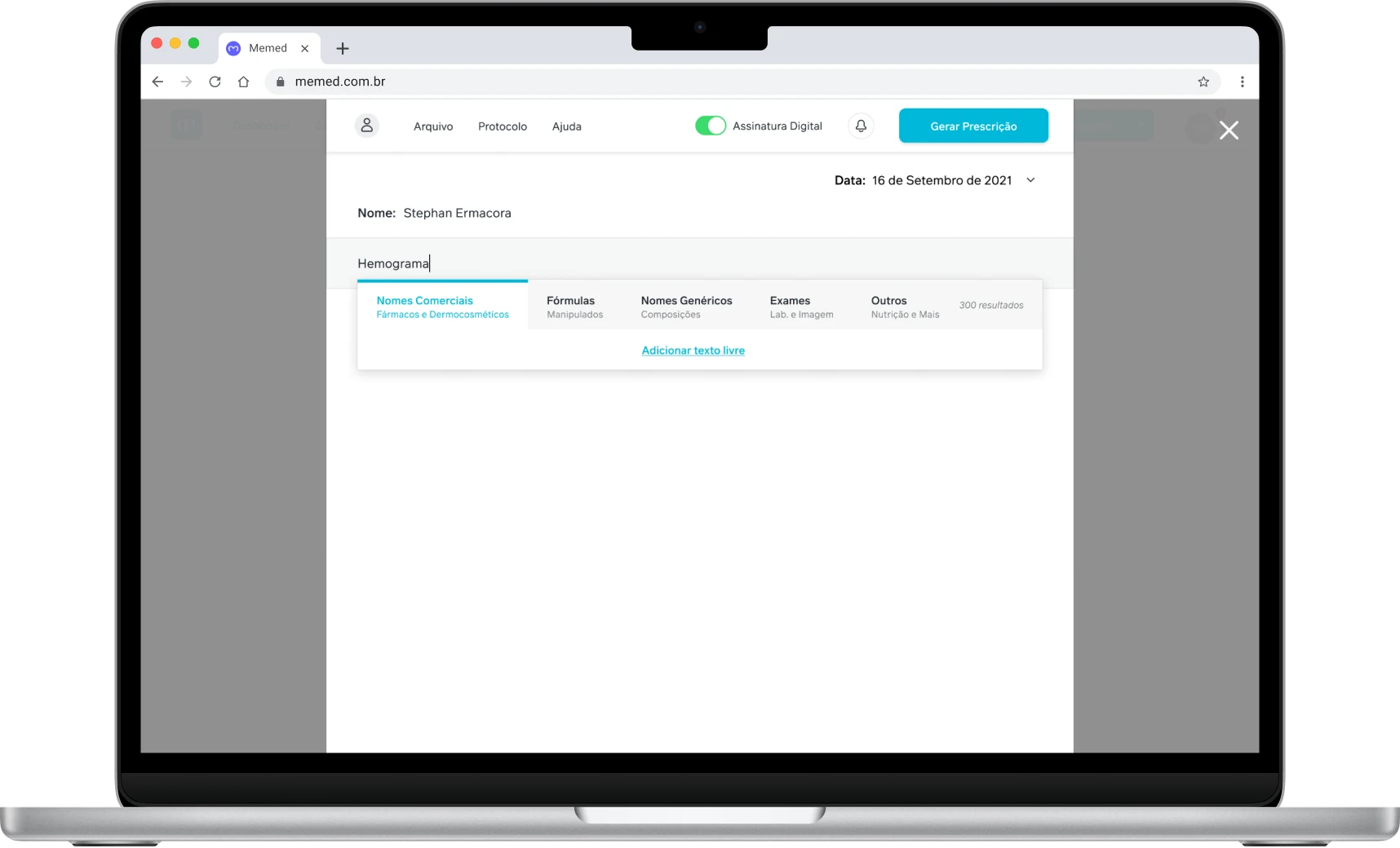
Around half of the documents issued by doctors on Memed were exam solicitations — an integral part of the diagnosis process, especially for clinical specialties. Of those, 75% were issued as plain text and only 25% used the platform’s structured format.
User research revealed why:
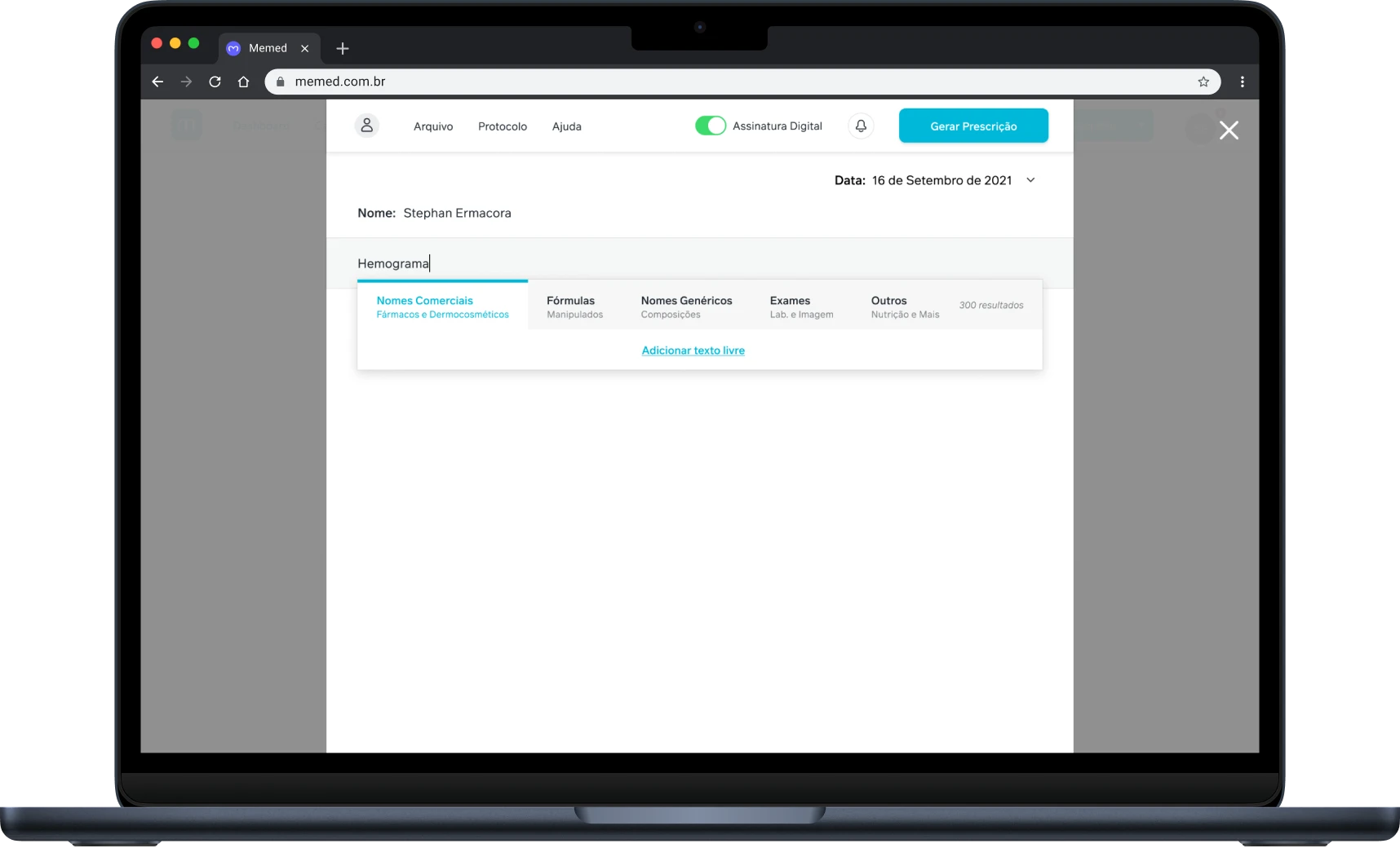
1. Many people didn’t even know they could issue structured exam solicitations on Memed. The option was a tab in the autocomplete box, in the prescription canvas. People don’t relate exam solicitations with prescriptions — they are different documents.
2. People were copying and pasting their own templates from a word processor and issuing plain text documents every time. This was inefficient and did not leverage the advantages of issuing structured documents, which in turn created a poorer UX for patients.
This was a big opportunity to improve discoverability, increase doctors’ agility to issue documents and process more structured data for a better patient experience.
Make it findable
Memed’s dashboard is the first place doctors interact with, as soon as they log in. We found that the activity stats weren’t relevant, and neither was the static help section.
We decided to expose the main functionalities as shortcuts on the dashboard, especially establishing this clear distinction between prescriptions and exams.
Microcopy and iconography research
We conducted a series of quick studies to optimize the comprehension of the shortcut buttons. Recognition tests for icons took a couple of hours and were extremely valuable to steer us in the right direction, especially for more abstract concepts.
Along with this new dashboard, there was also an effort to unify the platform’s global navigation and provide a consistent mobile experience. We highlighted the creation of a new document as the main action on Memed, accessible from anywhere.
Make it fast
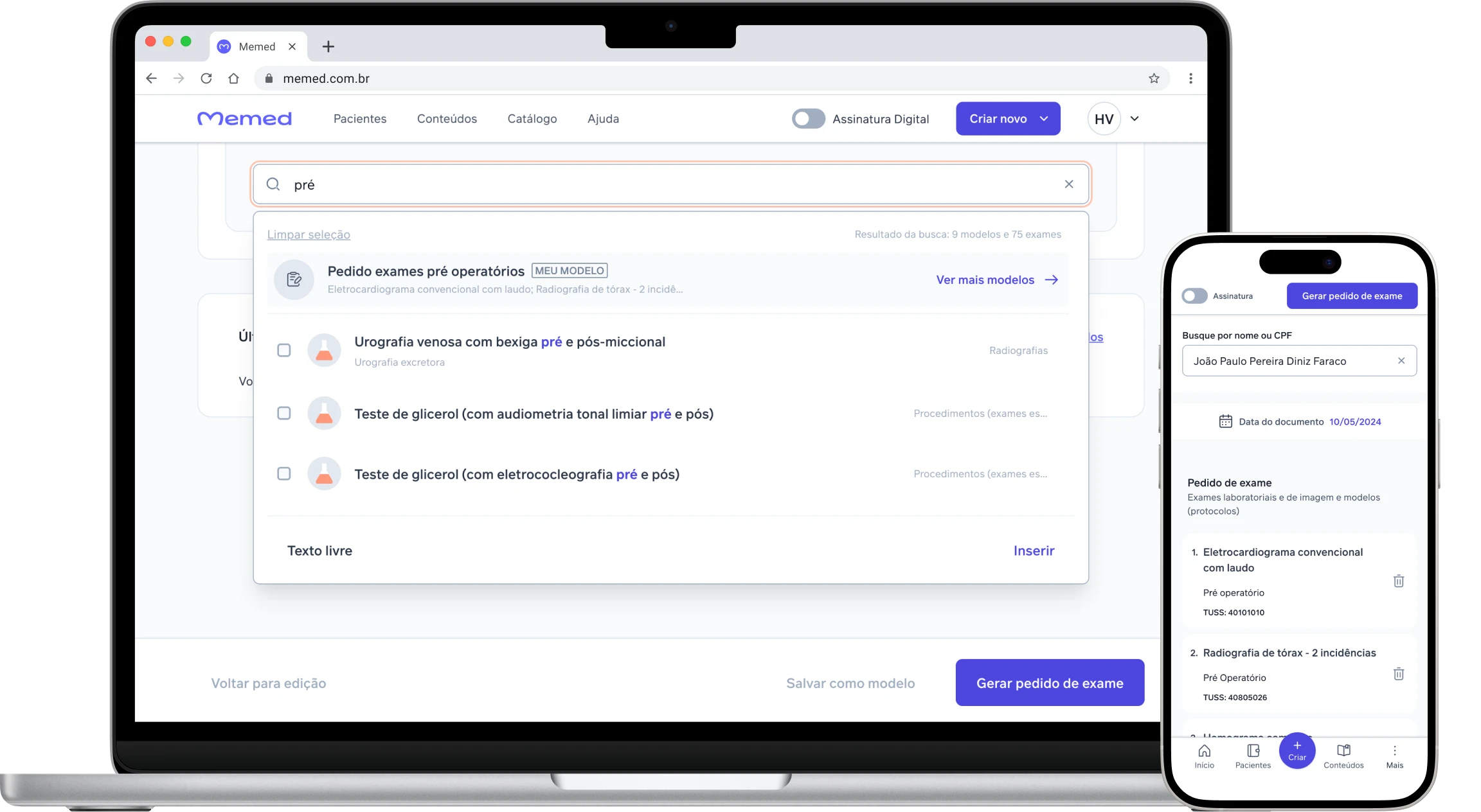
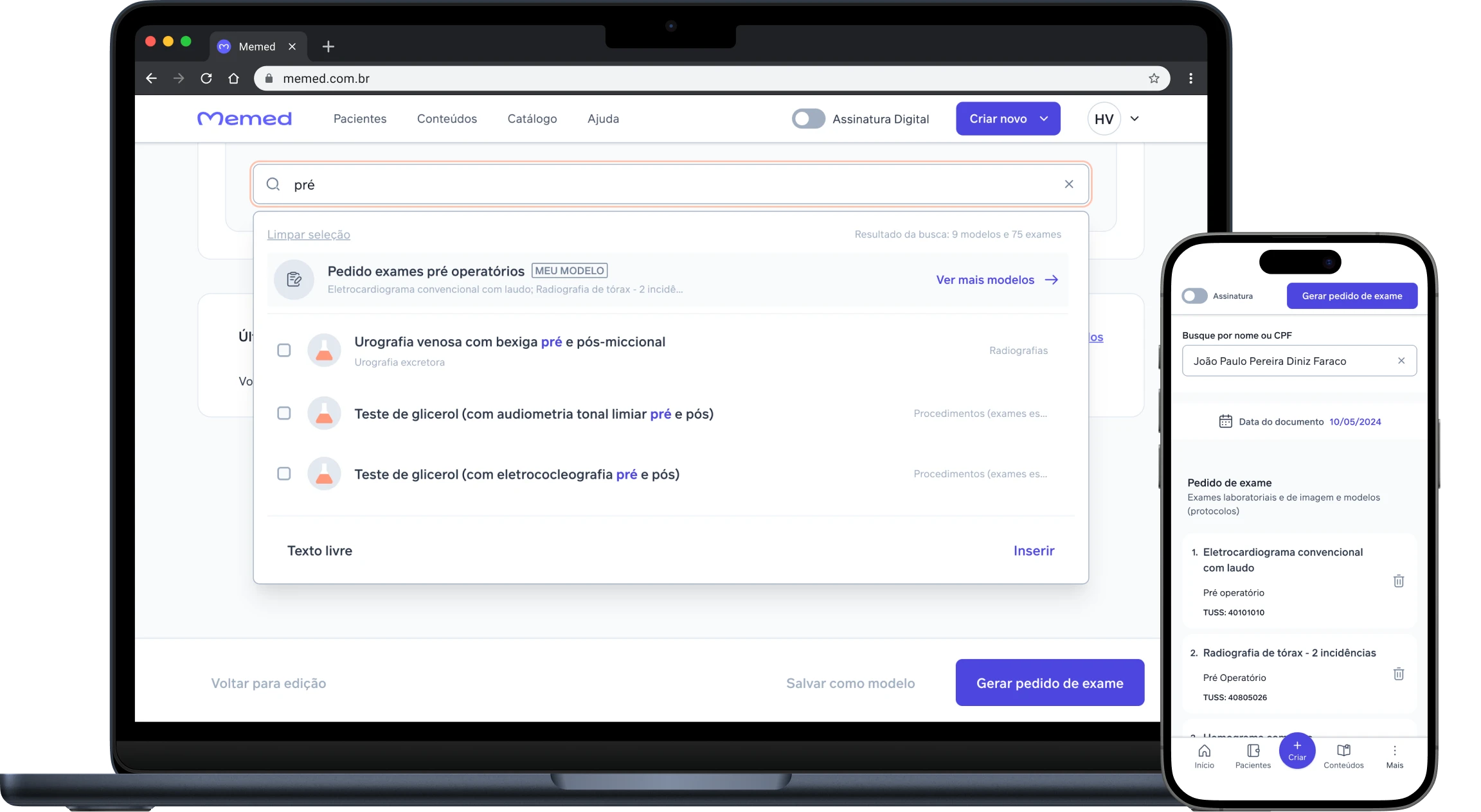
Most of the time, doctors issue the same sets of exam solicitations, so we incorporated protocols (templates) right into the main search input. The Clinical Intelligence team also published over 70 structured templates, so new users weren’t starting from scratch.
Building the Design System alongside
The exams project coincided with Memed’s rebranding. We seized the opportunity to fix accessibility issues in the previous color palette and create the platform’s Design System from scratch.
After an exhaustive component and content audit, we decided to build on top of an existing open source UI framework. This approach was compatible with the team’s resources and allowed for fast development and documentation of libraries and usage guidelines.
The new exams canvas was the first product shipped with the Design System — it served as a real-world pilot and validated the system in production before scaling to the rest of the platform.
Outcomes
We tracked adoption and usage frequency for the main user actions 4 months after launch.
By exposing exams as an independent feature on the dashboard, doctors increased usage of Exam (structured) and reduced usage of Exam (text). The average time to generate a solicitation dropped from 58 seconds to 17 seconds, a reduction of over 70%.
Protocols (templates) integrated into search and curated by the Clinical Intelligence team saw even stronger adoption: +194% in Insert protocol in prescription and +166% in Create protocols.